21st century learners deserve 21st century, skilled teachers.

Technology only transforms a classroom if the teacher standing in front of it knows how to use it. That's why teacher training sits at the center of the Centre of Excellence, across two areas: training mandated by CBSE, and training MMS runs on its own initiative.

Area 1 · Mandated by CBSE

CBSE-required professional development

CBSE requires every affiliated school's teaching faculty to complete a minimum number of in-service training hours each academic year, through CBSE-empanelled resource persons, PDW (Professional Development Workshop) modules, and capacity-building programmes.

Details of CBSE-mandated in-service training will be added here.
Area 2 · Institutional In-Service Training & Workshops

Training MMS runs on its own initiative

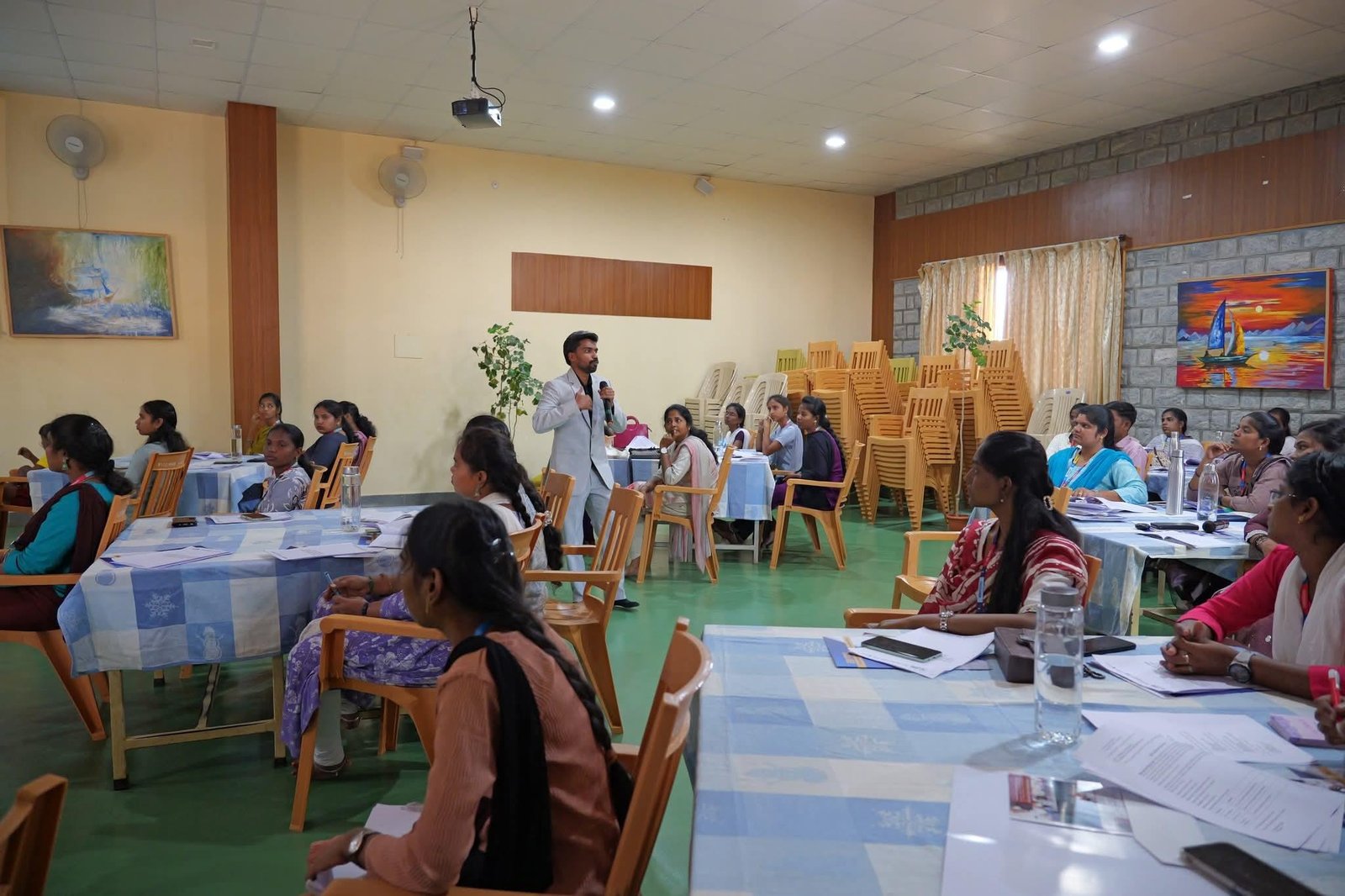
Beyond what CBSE requires, MMS runs its own faculty development: in-house upskilling, partnerships with colleges and universities, and a weekly peer knowledge-sharing programme of its own.

Institutional In-Service Training · August–October 2026

In-Service Training: Teachers for Transformation

Strengthening Teaching-Learning Practices through Continuous Professional Development

At Mathakondapalli Model School (MMS), we believe that meaningful educational transformation begins with the continuous learning and professional growth of teachers. As part of our ongoing efforts to strengthen teaching-learning practices in alignment with the National Education Policy (NEP) 2020 and National Curriculum Framework for School Education (NCF-SE) 2023, the school has initiated a structured series of “Teachers for Transformation” sessions.

The programme focuses on key areas of educational transformation and provides teachers with opportunities to reflect on existing practices, share experiences, explore innovative approaches, and translate new ideas into meaningful classroom practices.

15 Areas of Transformation

The professional learning programme covers 15 key areas of transformation:

1Textbook Transformation
2Curriculum Transformation
3Composite Lab Transformation
4Computational Thinking
5Artificial Intelligence
6Pedagogical Transformation
7Classroom Transformation
8Experiential Learning
9Kaushal Bodh – Skill Education
10Leadership Transformation
11Evidence-Based Teaching
12Project-Based Learning
13Parent Partnership
14Teacher Professional Identity
15Assessment Transformation

Session Schedule

Transformation Coordinators: Ms. Vasanthi & Ms. Muthupriya

No.Transformation AreaFaculty In-ChargeSession DateStatus
1Textbook TransformationMr. Seenivasan28 Aug 2026Completed
2Curriculum TransformationMr. Joseph Jayaraj & Mr. Udhayanan09 Sep 2026Completed
3Computational ThinkingMr. Jude Page & Ms. ChinmayaTo be rescheduledRescheduled
4Artificial IntelligenceMs. Nithya & Ms. Deepika16 Sep 2026Completed
5Pedagogical TransformationMs. Abharna25 Sep 2026Today
6Classroom TransformationMr. Sivaraj & Ms. Vasanthi21 Sep 2026Upcoming
7Experiential LearningMs. Parvathi23 Sep 2026Upcoming
8Kaushal Bodh – Skill EducationMr. Swetha & Ms. Ilakkiya25 Sep 2026Upcoming
9Leadership TransformationMs. Muthupriya & Ms. Deepika28 Sep 2026Upcoming
10Evidence-Based TeachingMr. Bathri & Mr. Sivaraj29 Sep 2026Upcoming
11Project-Based LearningDr. Bathri Devanath & Mr. Ganesh08 Oct 2026Upcoming
12Parent PartnershipMr. Joseph & Mr. Sreenivasan12 Oct 2026Upcoming
13Teacher Professional IdentityTo be announced14 Oct 2026Upcoming
14Assessment TransformationMr. Ganesh Kumar & Ms. Priya Cathrine16 Oct 2026Upcoming
15Composite Lab TransformationMr. PrabakaranTo be rescheduledRescheduled to last

Note: Composite Lab Transformation (Area 3) has been rescheduled and will now be delivered as the final session in the series.

These sessions are being facilitated by members of the MMS academic team, with teachers taking responsibility for sharing their expertise and leading professional-learning conversations across the school. The planned sessions run from August to October 2026, creating a continuous cycle of professional learning and reflection.

Learning Together. Transforming Practice.

The sessions are designed not merely as training programmes, but as opportunities for professional dialogue, collaborative learning and practice-based reflection. Teachers are encouraged to examine how the principles of NEP 2020 and NCF-SE 2023 can be meaningfully translated into curriculum planning, pedagogy, assessment, classroom environments, skill development, technology integration and partnerships with parents and the wider community.

Through this initiative, MMS seeks to build a culture of continuous professional learning, where teachers learn from one another, experiment with new approaches, and collectively contribute to the transformation of teaching and learning.

When teachers transform their practice, classrooms transform; when classrooms transform, learners flourish.
Teachers for Transformation – MMS · Reflect • Learn • Innovate • Transform
Microsoft Innovative Educator Expert

A faculty recognised well beyond the classroom

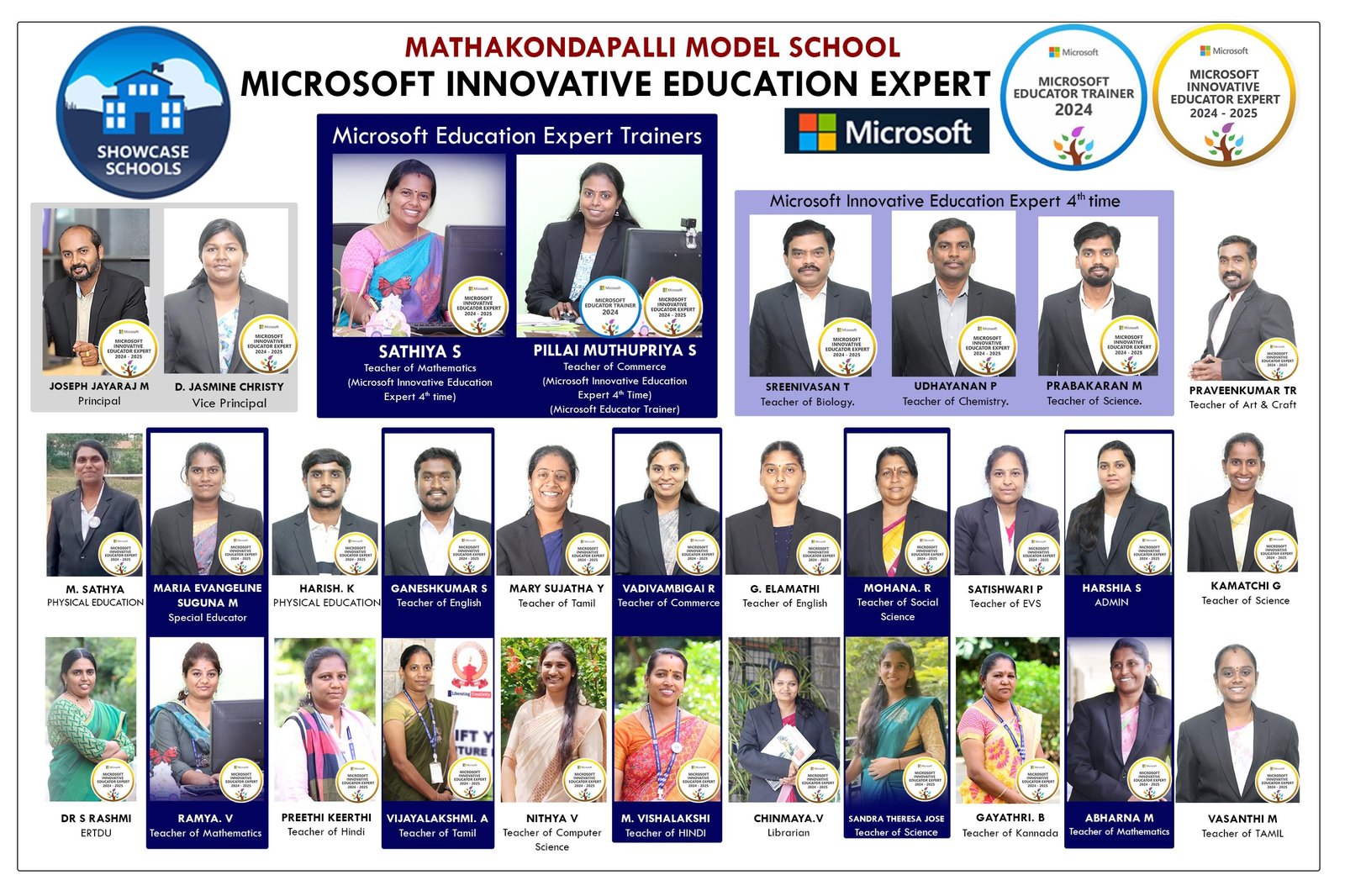
MMS is a Microsoft Showcase School. Its faculty includes two Microsoft Educator Trainers and multiple staff recognised as Microsoft Innovative Education Experts, several for the fourth consecutive year.

MMS teachers recognised as Microsoft Innovative Education Experts
Microsoft Showcase School 2 Educator Trainers MIEE 2024 to 2025
Hands-on upskilling

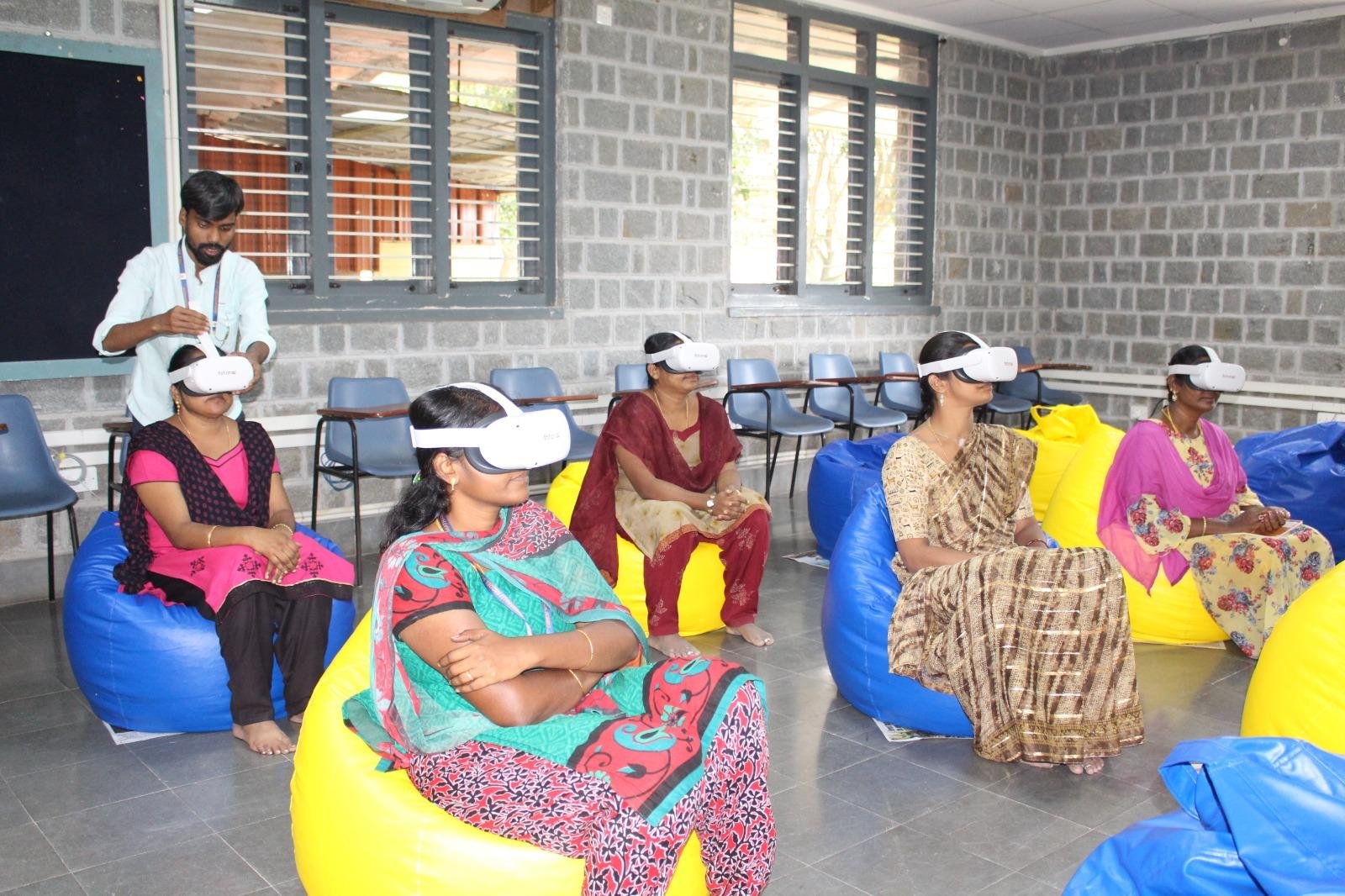
Training teachers to use the Virtual Reality classroom

Before VR reaches a single student, every teacher goes through the headset themselves, learning to run NCERT aligned simulations confidently and independently.

Teachers being trained to use VR headsets
Training B.Ed college students in technology integration
Beyond our own campus

Training B.Ed. college students

MMS extends its technology integration training to B.Ed. college students, passing the same skills on to the next generation of teachers before they even enter a classroom.

School Connect · IIT Madras, 12 July 2025

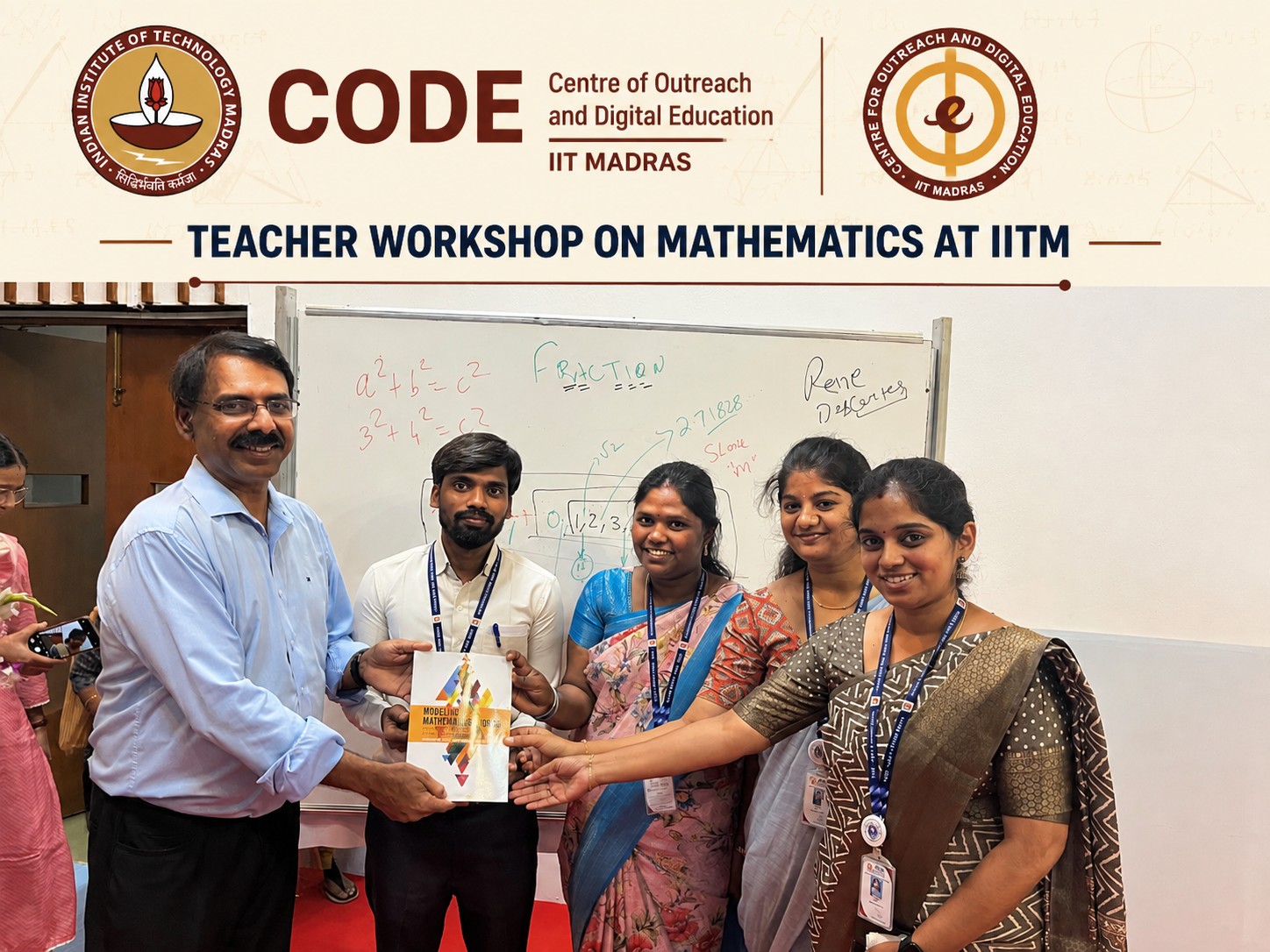
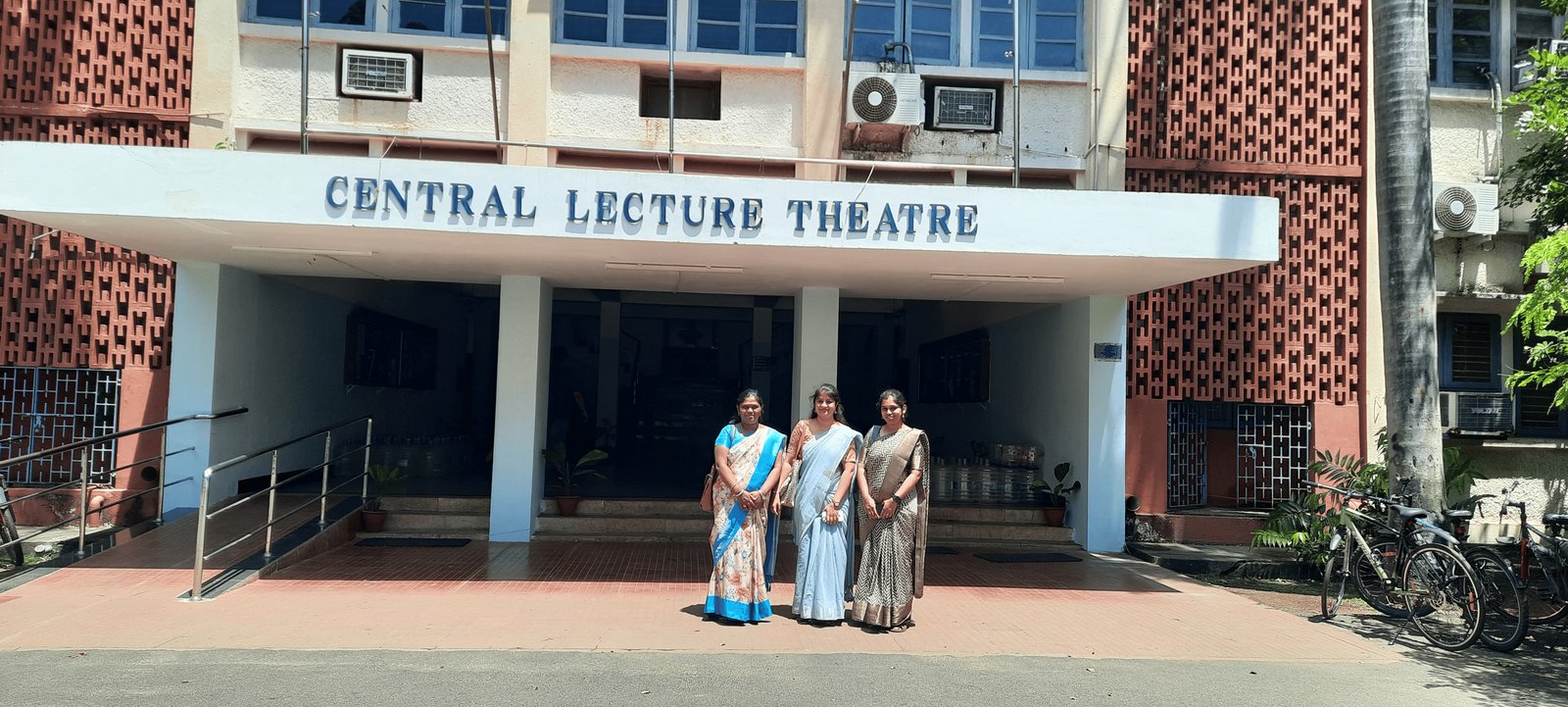
Mathematics Teachers Workshop at IIT Madras

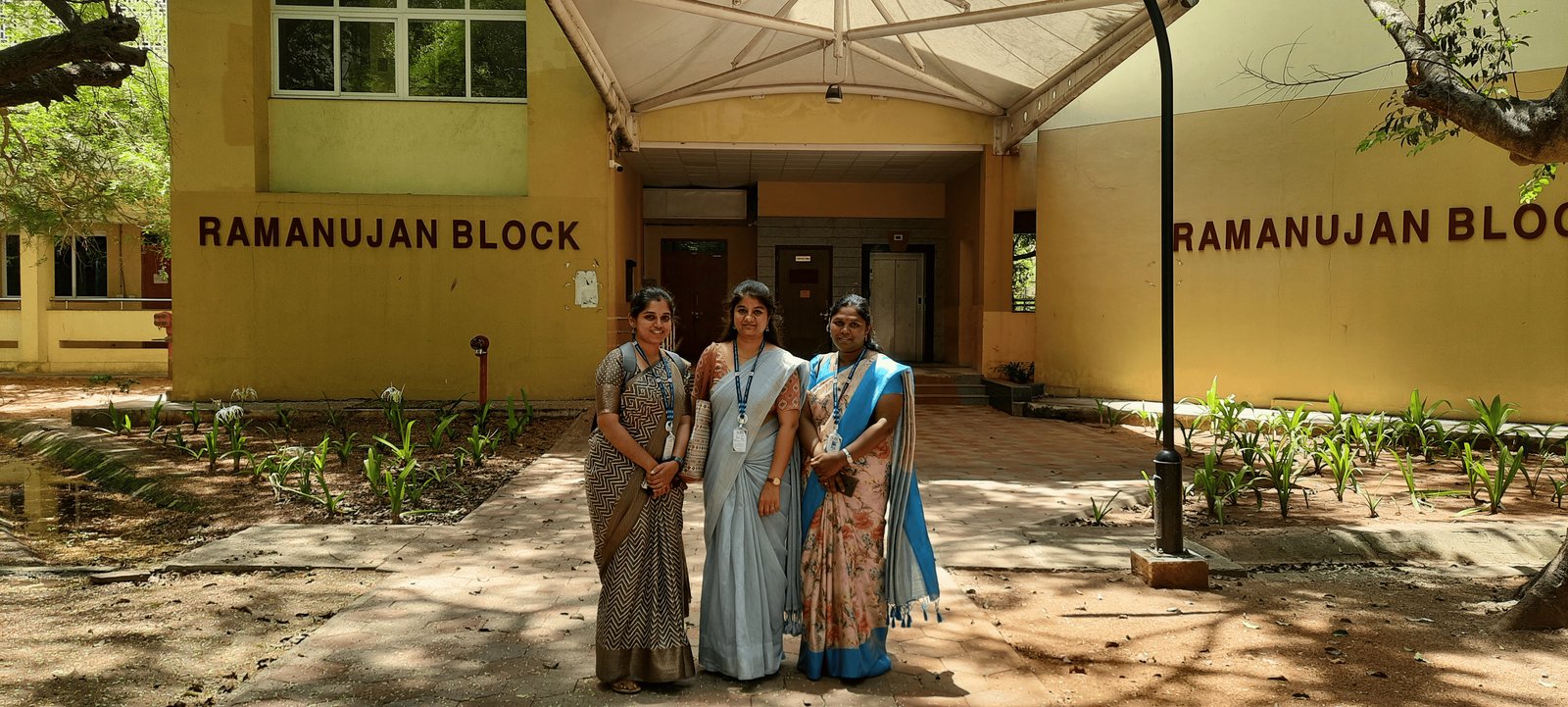
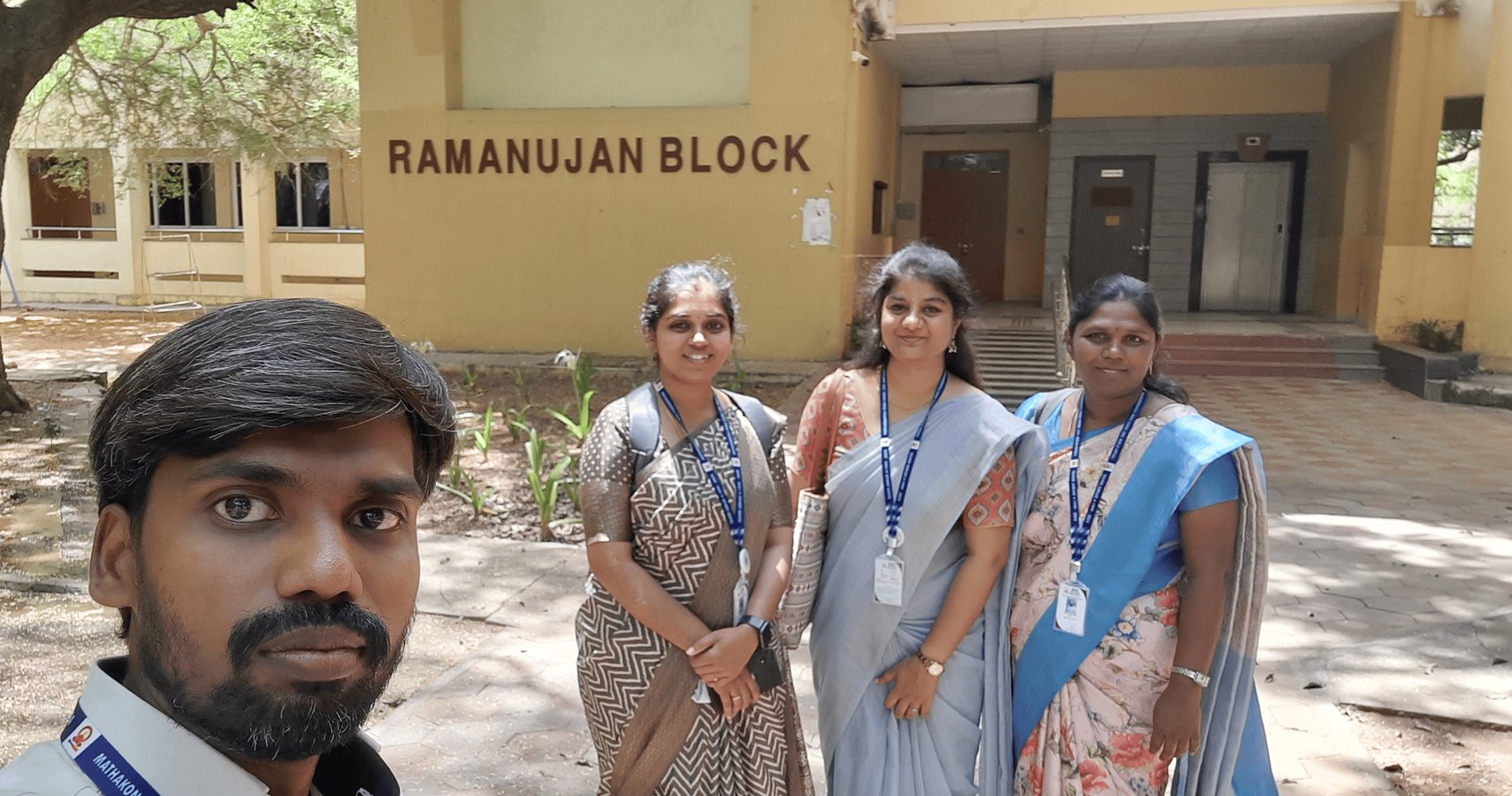
As part of the CODE, IIT Madras School Connect initiative, Tr. Priya Cathrine, Tr. Deepika, Tr. Ramya and Tr. Prabakaran, MMS's SPOC (Single Point of Contact) for the IIT Madras CODE programme, attended a Professional Development Workshop and Seminar on Modern Approaches in Mathematics Education at the Department of Mathematics, IIT Madras, led by Dr. Padmanabhan Seshaiyer of George Mason University, aimed at improving student engagement, conceptual clarity, and the link between school mathematics and real-world application.

Discussions covered course design that starts with simple games, puzzles and exploratory tasks before moving into the formal syllabus; the common gap schools see between problem-solving-based learning up to Grade 8 and the sudden shift to theory and formal proof from Grade 9 onward; and structured modules such as Vedic Mathematics, project-based learning, data literacy and bridge courses designed to ease that transition. Dr. Seshaiyer challenged the traditional teaching mindset, calling for classrooms built on exploration, curiosity, conceptual clarity and student ownership of learning, through multiple representations, storytelling in mathematics, learning from mistakes, and computational thinking. These ideas were grounded in activity-based approaches for Classes 9 and 10, covering topics from rate of change and derivatives to the Gauss formula and the perpendicular bisector theorem, using tools such as Google Cardboard, CODAP, Kaggle and PHET Simulations.

MMS Maths teacher Ms. Deepika represented the school's perspective on student engagement, the need for contextual, application-driven learning, and structured bridge programmes between grades, and these inputs were formally noted by the IIT Madras faculty; MMS is currently awaiting further communication on course details and collaboration timelines. Dr. Seshaiyer also offered to personally support an MMS student, Lohith, on a geometry theorem involving circles; proposed a follow-up Zoom session to help set up a functional Mathematics Lab at MMS; and introduced the ASPIRE platform for student STEM engagement. The seminar segment that followed connected data science and 21st-century skills to NEP 2020, covering the data cycle and challenge-based learning aligned to the Sustainable Development Goals.

Workshop report prepared by Tr. Deepika M.

School Connect Dr. Padmanabhan Seshaiyer Vedic Mathematics Bridge Courses Computational Thinking NEP 2020
Campus Visit · Alliance University, Bengaluru

Quantum Computing & Deep-Tech at Alliance Quasar Campus

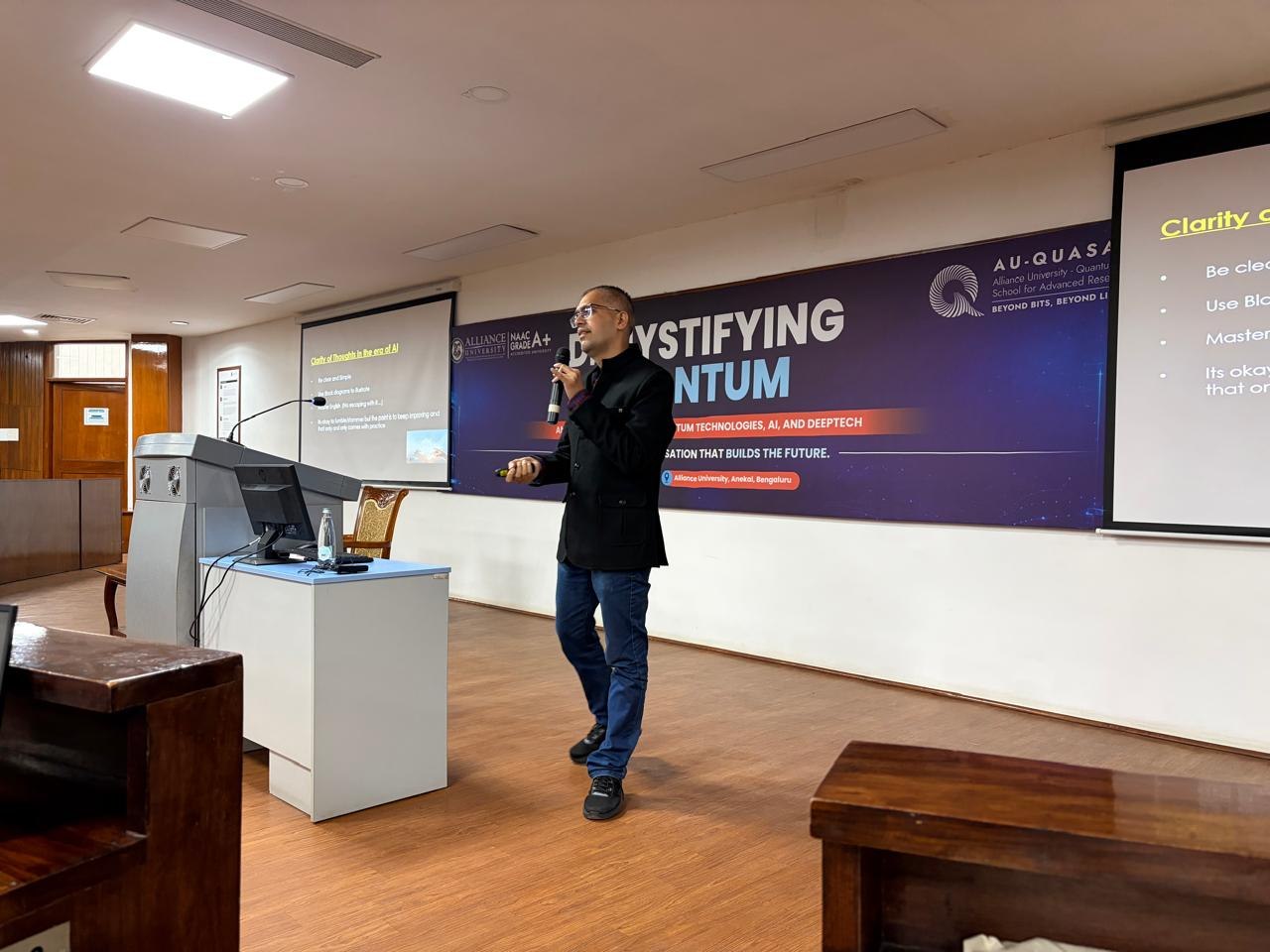
Mr. Prabakaran M, STEAM Coordinator, along with Tr. Nithya and Tr. Samson, attended a session on Quantum Computing, Data Science and Deep Technologies at the Alliance Quasar Campus, Alliance University, Bengaluru.

The session introduced the fundamentals of quantum computing: qubits versus classical bits, quantum entanglement, quantum architecture, and potential applications, along with its relationship to high-performance computing for complex problems. The programme also included sessions on the art of articulation and Deep Tech, broadening perspective on the skills and technologies future innovation will need.

Alliance Quasar Campus is a next-generation academic and research ecosystem focused on Quantum Computing, AI and Advanced Engineering. Its strategic collaboration with QpiAI gives learners and researchers access to real quantum computing infrastructure, including an 8-qubit superconducting quantum system, connecting the campus with India's National Quantum Mission and the wider global technology ecosystem.

The visit gave MMS educators a closer look at quantum computing, AI and deep-tech trends, and ideas for introducing age-appropriate computational thinking and innovation concepts into school-level STEAM learning, along with inspiration for building MMS's own academic-industry innovation ecosystem.

Attending from MMS: Mr. Prabakaran M (STEAM Coordinator), Tr. Nithya and Tr. Samson.

Quantum Computing Deep Tech QpiAI National Quantum Mission Data Science
Institutional In-Service Training · Weekly

ESEE Program · Enter to Share, Exit to Explore

MMS's own weekly faculty in-service programme: teachers enter each session to share an idea, strategy or resource with their colleagues, and exit having explored something new. Session details are added here week by week.

Loading sessions…
Our goal is not to teach technology, but to empower students to build the future with it.
Rate & Review